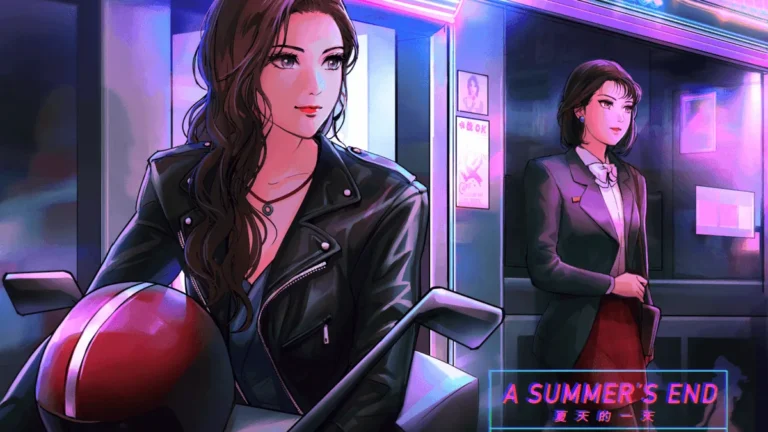
A Summer’s End – Hong Kong, 1986
Play A Summer’s End – Hong Kong, 1986
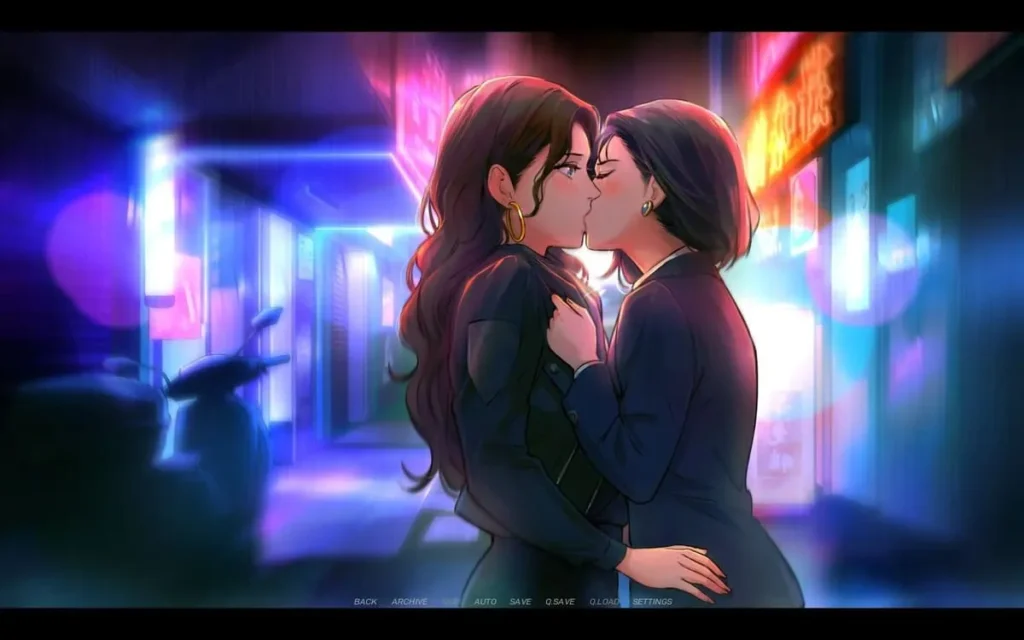
A Summer’s End – Hong Kong, 1986 Screenshots







A Summer’s End – Hong Kong, 1986 review
Explore the romantic story, gameplay mechanics, and cultural significance of this acclaimed indie visual novel
A Summer’s End – Hong Kong, 1986 is a visual novel that captures the essence of 1980s Hong Kong through an intimate love story between two women. This indie game combines stunning hand-drawn artwork inspired by 80s anime with an emotionally resonant narrative about identity, family, and romance. Set against the vibrant backdrop of iconic Hong Kong locations like Sai Kung and Mong Kok, the game explores what it means to be gay during uncertain times in a conservative culture. Whether you’re interested in visual novels, LGBTQ+ storytelling, or retro-inspired games, A Summer’s End offers a unique experience that balances compelling romance with thoughtful cultural commentary.
Story, Characters, and Narrative Depth
If you’re anything like me, you don’t just play a great visual novel romance for the pretty art or the soundtrack—you play it for the people. You want to get to know characters who feel real, whose struggles resonate, and whose happiness you become genuinely invested in. That’s the magic trick A Summer’s End – Hong Kong, 1986 pulls off with stunning grace. Its story isn’t just a backdrop; it’s a deeply personal, culturally rich, and emotionally authentic journey that stays with you long after the credits roll.
This isn’t a tale of epic fantasy or supernatural mystery. It’s a grounded, intimate portrait of life, love, and self-discovery in a specific time and place. The A Summer’s End Hong Kong 1986 story excels because it understands that the most profound adventures often happen within the human heart, and it invites you to witness one woman’s pivotal summer of change. 🏙️✨
Following Michelle’s Journey: The Protagonist’s Personal Growth
At the center of this acclaimed LGBTQ+ visual novel is Michelle, a character so well-observed she feels less like a digital creation and more like someone you might have known. When we first meet her, she’s the picture of a dutiful, somewhat reserved office worker in 1980s Hong Kong. Her life is a series of routines: work, family dinners, and the quiet expectation of a conventional future. She’s successful on the surface, but there’s a palpable sense of something unspoken, a part of herself she keeps neatly compartmentalized.
Playing as Michelle is a masterclass in visual novel character development. The game doesn’t tell you she’s repressed; it shows you through exquisite detail. You feel the weight of her familial duty, the subtle pressure from her mother’s matchmaking attempts, and the way she navigates office politics with careful poise. Her initial interactions are often laced with a polite hesitation, a dance of words and withheld feelings that will feel familiar to many with East Asian backgrounds. This isn’t just a stylistic choice; it’s foundational to her character. The narrative allows you to sit with her in these moments of quiet conflict, making her eventual steps toward authenticity all the more powerful.
Her growth is the engine of the entire A Summer’s End Hong Kong 1986 story. This isn’t a story about “becoming gay”; it’s a story about becoming yourself. Michelle’s journey is one of giving herself permission—to desire, to choose her own path, and to confront the potential cost of that choice. Every decision you make, from a casual remark to a significant life choice, gently shapes her confidence and self-understanding. You’re not just guiding her to an ending; you’re participating in the delicate, sometimes scary, process of her waking up to her own life. Witnessing her find her voice and assert her own desires is the core, beautiful payoff of the experience. 🌱➡️🌟
The Chemistry Between Michelle and Sam: A Quick-Burn Romance
Now, let’s talk about the heart of the game: the Michelle and Sam relationship. If you’re tired of slow-burn romances that take forever to spark, this narrative offers a wonderfully refreshing alternative: the quick-burn romance. From their very first, slightly awkward encounter in a video store, there’s an immediate and undeniable charge between them. The attraction isn’t buried under chapters of will-they-won’t-they; it’s present, acknowledged, and it accelerates the plot in the most compelling way.
This “quick-burn” approach is a narrative superpower. Because the mutual attraction is established early, the story can move beyond “Do they like each other?” to explore the far more interesting questions: “What does this mean for them?” and “How will they navigate this in their world?” Their connection deepens not from overcoming initial dislike, but from navigating the realities of a queer love story game set in 1986. They share dreams over noodles, confide in each other in intimate spaces, and grapple with the external pressures that threaten their budding relationship.
Sam, with her free-spirited artist lifestyle and more outwardly confident demeanor, acts as both a catalyst and a sanctuary for Michelle. She isn’t a “manic pixie dream girl” there to fix Michelle’s life; she’s a fully realized person with her own fears and complexities. Their dynamic feels incredibly genuine. They challenge each other, support each other, and sometimes misunderstand each other, all while building a bond that is both passionate and tender. The writing of their dialogue—flirtatious, vulnerable, and real—makes their romance one of the most believable and heartwarming I’ve experienced in any visual novel romance.
“The game treats themes like family conflict and societal homophobia with a rare, dignified authenticity. It acknowledges the pain and tension without ever defining the characters or their love by that pain. The focus remains steadfastly on their humanity and their joy.”
And for those seeking a deeper layer of intimacy, the optional adult patch deserves mention. It’s not gratuitous; instead, it serves as a natural extension of their emotional journey. These scenes are woven into the narrative with care, emphasizing vulnerability, consent, and emotional connection, which significantly enhances the story’s emotional payoff and makes the stakes of their relationship feel even more real.
Supporting Characters and Relationship Dynamics
The world of A Summer’s End isn’t built solely for its two leads. The supporting cast adds crucial texture, pressure, and perspective, making Michelle’s world feel fully lived-in. These characters aren’t just plot devices; they represent the different facets of life and expectation that Michelle must reconcile.
The most prominent of these is Joey, Michelle’s well-meaning but hopelessly infatuated coworker. Joey’s role is fascinating. He’s not a villain. In fact, he’s kind, earnest, and represents the “safe,” expected path—the potential boyfriend her mother would approve of. His presence creates a constant, low-level dramatic irony and tension. Your interactions with him aren’t about cruelty, but about navigating a difficult social situation with as much grace as possible, which adds a layer of relatable complexity to Michelle’s daily life. His storyline is a poignant reminder of the unintended casualties when one begins to live truthfully.
Then there’s Michelle’s family, particularly her mother. The familial dynamics are portrayed with exquisite subtlety. Conversations are laden with unspoken expectations, generational divides, and deep, if sometimes conditional, love. The game brilliantly uses the “dancing around subjects” communication style common in many families to build incredible narrative tension. A simple question about work can feel loaded; a comment about a friend’s marriage carries a world of subtext. This makes the potential for family conflict over her relationship with Sam feel terrifyingly real and deeply personal, rather than a generic story beat.
To help keep track of the key players in Michelle’s world, here’s a breakdown:
| Character | Role | Relationship to Michelle & Narrative Function |
|---|---|---|
| Michelle | Protagonist | The office worker on a journey of self-discovery. We experience the story through her eyes, and her personal growth is the central arc. |
| Sam | Love Interest | The confident artist who sparks Michelle’s journey. She represents freedom, authenticity, and a different possible future. |
| Joey | Co-worker / Suitor | The embodiment of the “expected” path. His presence creates social tension and highlights the life Michelle is expected to choose. |
| Michelle’s Mother | Family | Represents familial duty, tradition, and love intertwined with expectation. Her dynamic with Michelle is central to the story’s emotional conflict. |
| Fai | Friend | A connection to Michelle’s social world, offering a peer perspective and a touchstone for “normal” life outside her new experiences with Sam. |
These relationships collectively build the pressure and beauty of Michelle’s summer. They ask the player, through Michelle, what they are willing to risk for happiness, and what authenticity truly costs.
Navigating Endings and Emotional Impact
The culmination of your choices throughout this exquisite queer love story game leads to one of two definitive visual novel endings. Unlike many games with a dozen branching paths, A Summer’s End focuses on two core conclusions, and this focus is its strength. Each ending is fully realized, emotionally resonant, and thematically consistent, offering a complete, albeit different, conclusion to Michelle’s summer.
Without spoiling the delicate details, the endings broadly represent a choice between two valid but difficult paths: one of courageous commitment in the face of uncertainty, and another of poignant, personal resolution that prioritizes a different kind of growth. Neither is framed as simply “good” or “bad.” Both are treated with respect and emotional weight, asking you to consider what “happiness” and “truth” mean for Michelle at this moment in her life. Your decisions throughout the game—how open you are with Sam, how you handle Joey, how you communicate with your family—gently steer you toward the conclusion that best reflects the Michelle you have shaped.
This approach reinforces the game’s greatest triumph: it is a queer love story written for people who appreciate queer narratives with happy endings. It defiantly centers joy, passion, and fulfillment. While it honestly tackles homophobia and familial pressure, it refuses to let tragedy define its characters. The potential for a happy, loving ending is real and hard-won, which makes the entire experience feel empowering and hopeful. In a landscape where queer stories are often synonymous with angst, this game is a balm and a celebration. 🏳️🌈❤️
The A Summer’s End Hong Kong 1986 story ultimately succeeds because it understands that powerful storytelling is about emotional truth. It wraps you in the neon glow and humid air of 1980s Hong Kong, introduces you to people who feel heartbreakingly real, and lets you guide them through a summer that changes everything. It’s a testament to the power of the visual novel romance format for telling intimate, culturally-specific, and universally human stories. Whether you see both visual novel endings or find your truth in just one, the journey of Michelle and Sam is one that will leave a permanent, warm mark on your heart.
A Summer’s End – Hong Kong, 1986 stands out as a remarkable visual novel that transcends typical genre conventions. By weaving together authentic Hong Kong settings, compelling character development, and thoughtful exploration of identity and family dynamics, the game creates an unforgettable experience. The combination of stunning hand-drawn artwork, immersive 80s-inspired soundtrack, and meaningful narrative choices makes it a must-play for visual novel enthusiasts and anyone interested in LGBTQ+ storytelling. Whether you’re drawn to the game’s retro aesthetic, its cultural significance, or its genuine portrayal of love and acceptance, A Summer’s End offers something truly special. If you’re looking for a visual novel that balances romance with substance, this indie gem deserves a place in your collection.