Good Girl Gone Bad
Play Good Girl Gone Bad
Good Girl Gone Bad Screenshots










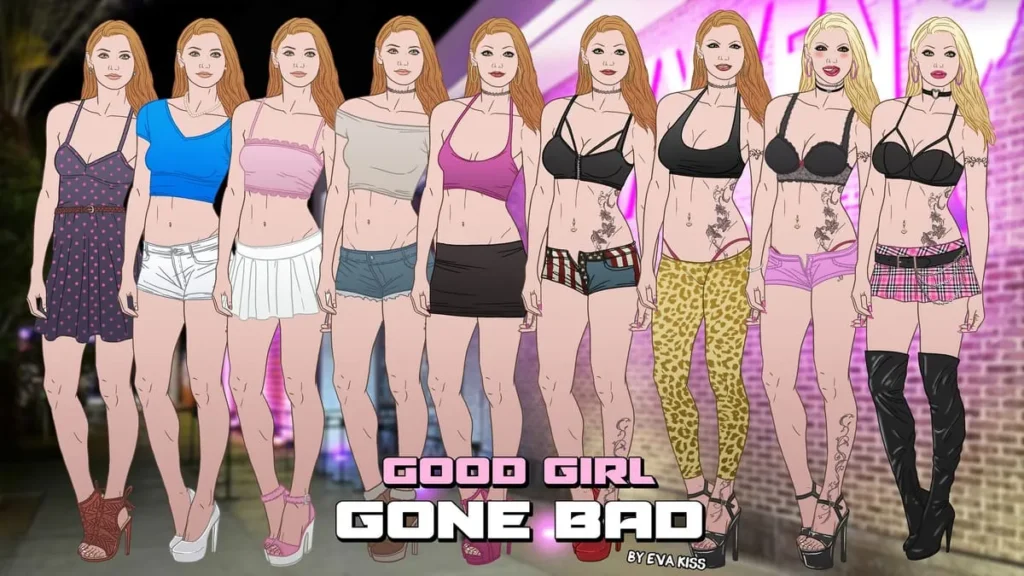




Good Girl Gone Bad review
Master the branching storyline, character choices, and endings in this adult visual novel
Good Girl Gone Bad is a narrative-driven adult visual novel that puts you in control of Ashley Graham’s destiny. Created by Eva Kiss, this game stands out for its hand-crafted art style, complex branching storyline, and meaningful player choices that genuinely impact the narrative direction. Whether you’re exploring the game for the first time or seeking to unlock all possible endings, understanding the core mechanics and story paths is essential. This comprehensive guide covers everything you need to know about gameplay, character development, decision-making systems, and how your choices shape Ashley’s journey from innocence to moral ambiguity.
Understanding Good Girl Gone Bad: Game Overview & Core Mechanics
Ever loaded up a game expecting one kind of experience, only to have it completely rewire your brain about what interactive storytelling can be? 😲 That was me with Good Girl Gone Bad. I went in thinking I understood the landscape of adult visual novels, only to be completely floored by its depth, artistry, and the sheer weight of its branching narrative choices. This isn’t just a game; it’s a masterclass in player agency and character transformation, wrapped in a stunning hand-drawn art style adult game aesthetic that feels deeply personal and raw.
So, what’s the big deal? Why has this title, crafted by the visionary Eva Kiss game design philosophy, garnered such a dedicated following? It all starts by throwing out the rulebook. Forget silent protagonists and linear plots. Here, you are Ashley Graham, and every decision, from the seemingly innocent to the wildly kinky, carves a unique path through her life. This guide will dive into the heart of the Good Girl Gone Bad visual novel, exploring its core mechanics and why it remains a standout title for players craving substance with their spice. Let’s get started.
What Makes This Visual Novel Unique
In a digital ocean filled with similar-looking 3D models and predictable scripts, Good Girl Gone Bad stands out like a meticulously illustrated storybook in a warehouse of photocopies. ✨ Its uniqueness isn’t just one feature but a powerful fusion of several key elements that create an unforgettable experience.
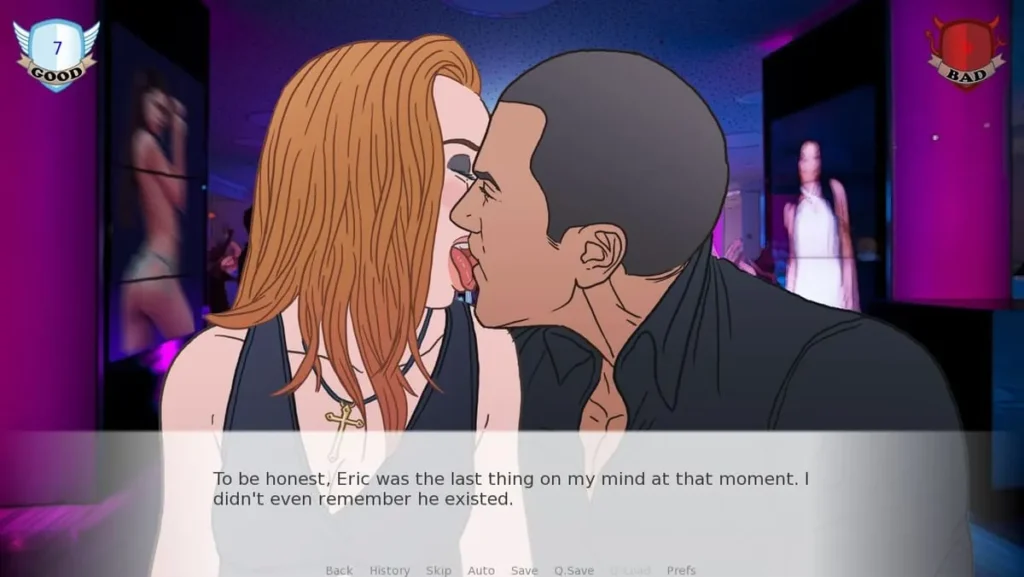
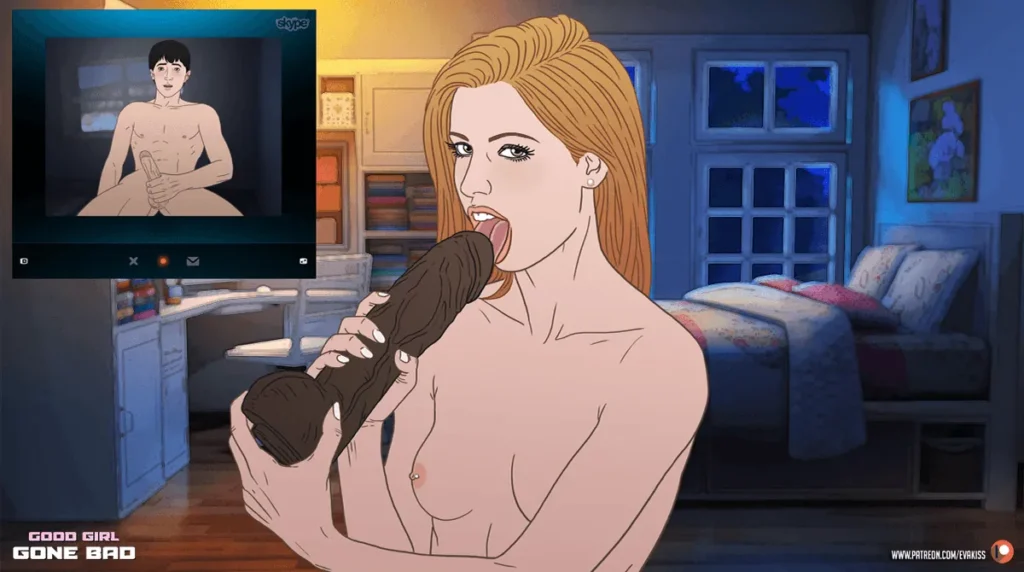
First and foremost, the hand-drawn art style is a revelation. Every character, every scene, every expressive blush or smirk is crafted with pencil-and-paper humanity. This approach, central to the Eva Kiss game design ethos, gives the game a tangible, almost intimate quality. The characters feel like real people with flaws and quirks, not plastic dolls. This art style directly supports the narrative, making Ashley’s journey—her confusion, her excitement, her corruption—feel incredibly visceral. When a scene shifts tone, the art sells it completely, something that can feel sterile in more generic 3D engines.
But the beauty is more than skin deep. The Good Girl Gone Bad visual novel format is used not as a limitation, but as a laser focus on narrative and choice. The game understands that its power lies in the written word and the player’s imagination, guided by evocative visuals. This allows for a staggering scope in storytelling. The plot isn’t constrained by expensive animations; it can sprawl, branch, and delve into complex emotional and social territories because the primary “cost” is writing and drawing. And my, does it sprawl.
Pro Tip: Don’t rush through the text. The richness of the Good Girl Gone Bad world is in the details—the way characters describe a location, their internal monologue, and the subtle cues in dialogue. Savor it like a novel, and you’ll be rewarded with much deeper immersion.
Finally, we have to talk about the integration of its adult content. For many games, mature scenes are the goal, the checkpoint. In Good Girl Gone Bad, they are a consequence and a catalyst. The game’s adult game mechanics are seamlessly woven into the narrative progression. A risky choice might lead to an intimate scene, but that scene will then alter your relationships, open new story branches, or close others forever. It’s never just for show; it’s a fundamental part of Ashley’s evolving identity and the plot’s architecture. This commitment to coherent storytelling elevates it from a simple pleasure to a genuinely compelling drama about exploration, power, and self-discovery.
Character Development & Ashley’s Journey
Who is Ashley Graham? At the start, she’s someone many of us can relate to, or at least recognize. 👩🎓 She’s a college student, smart, with a stable boyfriend (Kevin) and a best friend (Sophie). She lives within the lines of societal and self-imposed expectations—the “good girl.” The magic—and the challenge—of Ashley Graham character gameplay is that you decide what happens when those lines begin to blur, then shatter.
You don’t just watch Ashley’s transformation; you drive it through every single choice. This is where the game shines. Will you have her study diligently for her exam, or sneak out to a party? Will she defend her friend, or give in to peer pressure? These early, seemingly small decisions are the first cracks in her pristine facade. The game tracks your behavior meticulously, influencing how other characters perceive Ashley and, crucially, how she sees herself. This internal shift is the core of the experience. You might start a playthrough intending to be slightly rebellious, only to find yourself, dozens of choices later, orchestrating scenarios you never initially imagined. That’s authentic character development.
The people around Ashley are not mere props; they are mirrors and catalysts. Your choices with them—romantic, sexual, friendly, or manipulative—directly shape her path. Pursuing a flirtation with the charismatic professor, Mr. Reed, opens a world of intellectual seduction and power dynamics. Getting involved with Sophie can lead to a tender exploration of friendship and love, or a tumultuous drama. Even casual encounters with secondary characters can have surprising ripple effects, locking or unlocking entire story arcs. This network of relationships makes the world feel alive and reactive, a key triumph of Eva Kiss game design.
Ashley Graham character gameplay is ultimately about agency and identity. The game boldly explores themes of moral choices in games, but rarely in a simple “good vs. evil” binary. Is it “bad” to explore your sexuality? Is it “good” to stay in a comfortable but unfulfilling relationship? The game refuses to judge. Instead, it presents scenarios and consequences, letting you sit with the outcomes. You might feel empowered, ashamed, liberated, or used—often a complex mix of all four. This emotional resonance is what makes Ashley’s journey so compelling. You’re not just picking options; you’re navigating the messy, confusing, and thrilling process of a person deciding who they want to be.
How Choice Systems Shape Your Story
The beating heart of this entire experience is its revolutionary approach to choice. This isn’t a game with a few dialogue forks that reconvene at the same plot points. The branching narrative choices in Good Girl Gone Bad are the architects of your unique story. Think of it less like a “choose your own adventure” book and more like cultivating a garden; every decision plants a seed, and which seeds you water determines the entire ecosystem of your playthrough. 🌱➡️🌳
The system works on both macro and micro levels. Small, everyday choices accumulate to set your character traits. Are you becoming more Confident, Corrupt, Submissive, or Romantic? These hidden statistics are constantly updated and directly influence which options are available to you later. A submissive Ashley might have the chance to yield in a certain conflict, while a confident one can seize control. This means two players can arrive at the same story beat but have completely different paths to get there and different tools to deal with it. It makes every playthrough deeply personal.
Furthermore, the game employs a brilliant “point of no return” structure within its chapters. Major decisions often lock you into a specific story branch, closing off other avenues for that playthrough. This gives your choices tremendous weight. There’s no quick-saving before a big decision to see both outcomes without consequence. If you choose to pursue a secret affair, you are committing to the drama, the risks, and the rewards that come with it. This creates genuine tension and replayability. You’re not just reading a story; you are responsible for it. To master the Good Girl Gone Bad visual novel, you must embrace this philosophy: live with your decisions.
To illustrate just how impactful early choices can be, let’s look at how a few key moments can send Ashley’s life in wildly different directions:
| Early Game Choice | Immediate Consequence | Potential Long-Term Story Branch |
|---|---|---|
| Accept Mr. Reed’s private “tutoring” offer | Begins a secret academic/personal relationship. Increases “Corrupt” or “Romantic” traits. | Unlocks the sophisticated, power-dynamic heavy “Reed’s Muse” path, potentially leading to a dominant/submissive dynamic or a complex affair that threatens Ashley’s public life. |
| Stand up for Sophie at the club | Solidifies loyalty with Sophie. Can increase “Confident” trait. May alienate other friends. | Opens the deep “Best Friends to Lovers” path, focusing on emotional intimacy and navigating a changing relationship, potentially leading to a tender, romantic ending with Sophie. |
| Give in to the pressure and flash the bartender | Gains immediate notoriety/attention. Significantly boosts “Corrupt” trait. Alters how friends view Ashley. | Triggers the “Party Girl” descent, opening storylines centered on hedonism, public exploration, and connections with more risqué characters, often leading to wilder, more chaotic endings. |
| Focus solely on studies and stay loyal to Kevin | Maintains “Good Girl” status. Strengthens relationship with Kevin. Limits early wild options. | Leads to the “Traditional” path, which isn’t without its own drama, but focuses on different tensions: societal expectations, commitment, and the quiet temptation of the road not taken. |
This table only scratches the surface! 😅 The true genius is in the combinations. Maybe you start with Reed, gain confidence, and then pivot to assert yourself in other relationships. Or perhaps your party-girl antics lead you to someone who introduces a whole new world of kink. The permutations feel endless, making Ashley Graham character gameplay incredibly rich.
Ultimately, the branching narrative choices serve one master: theme. The game is an exploration of the “good girl gone bad” trope in all its nuanced glory. Through your decisions, you explore what “bad” even means—is it moral failing, sexual liberation, selfishness, or freedom? The game provides a safe, digital space to confront these moral choices in games, free from real-world judgment. You can play as an assertive woman owning her desires, a manipulative social climber, a submissive explorer, or a loyal partner tested by temptation. Every ending feels earned, a direct product of the persona you crafted through thousands of small decisions.
This is what makes Good Girl Gone Bad more than just a game. It’s a narrative engine powered by your curiosity, your morals, and your desires. It respects your intelligence and rewards your investment with stories that feel truely your own. Now that you understand its core mechanics, you’re ready to dive in and begin shaping Ashley’s world—and discovering your own storytelling preferences along the way. Happy exploring
Good Girl Gone Bad delivers a compelling experience that goes beyond typical adult entertainment by prioritizing narrative depth, character development, and meaningful player agency. The game’s hand-crafted art style, complex branching storyline, and emphasis on coherent storytelling set it apart in the visual novel genre. Whether you’re drawn to the moral ambiguity of Ashley’s journey, the satisfaction of discovering multiple endings, or the freedom to shape her destiny through your choices, this game offers substantial replay value and engaging content. The addition of DLC expansions like the Jasmin content further extends the experience. For players seeking a visual novel that respects their intelligence while delivering mature themes and kinky scenarios, Good Girl Gone Bad represents a thoughtfully crafted narrative experience where your decisions genuinely matter.