
Our Red String
Play Our Red String
Our Red String Screenshots















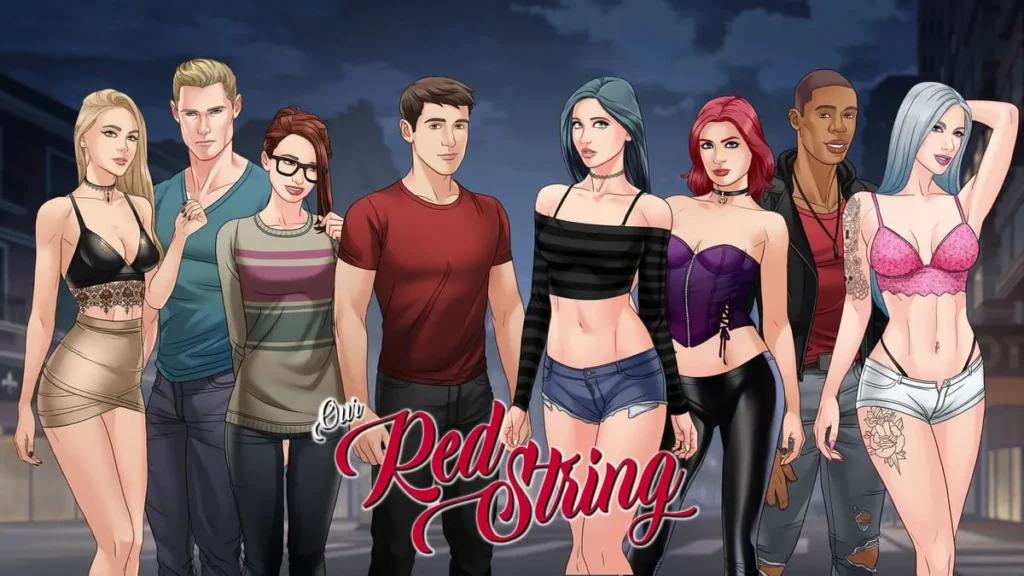
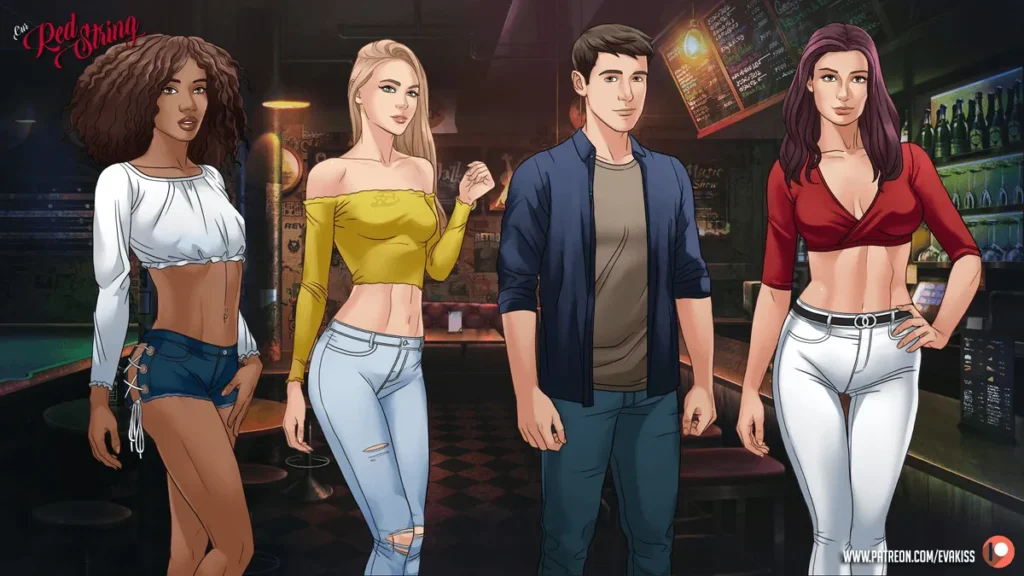



Our Red String review
Master the dual-protagonist narrative with strategic decision-making and relationship mechanics
Our Red String stands out as a sophisticated dual-protagonist interactive narrative experience that prioritizes player agency through meaningful choices. This non-linear game framework allows decisions to fundamentally alter story progression, character relationships, and ultimate outcomes. Whether you’re navigating complex relationship dynamics, optimizing stat development, or uncovering hidden story branches, understanding the game’s intricate systems transforms your experience from casual playthrough to strategic narrative exploration. This guide provides actionable insights into mastering the game’s mechanics and discovering all available paths.
Understanding Our Red String’s Core Mechanics and Systems
Ever felt like you’re just clicking through a visual novel, hoping for the best, only to hit a dead end or miss a scene you really wanted? 😩 I’ve been there. When I first started playing Our Red String, I treated it like any other story—I just picked what felt right in the moment. Big mistake. I quickly found my characters, Lena and Ian, locked out of conversations, missing romantic opportunities, and stumbling into arguments they couldn’t recover from. It was frustrating! That’s when I realized Our Red String isn’t just a story you read; it’s a complex, living world you manage.
Luckily, there’s a method to the madness. 🧠 At its heart, this decision branching game is powered by two elegant, interlocking systems: your personal stats and your web of relationships. Mastering these is the key to unlocking the full, rich tapestry of the narrative. This Our Red String gameplay guide is designed to pull back the curtain on those core mechanics and systems. Think of it as your cheat sheet to understanding the rules of this world, so you can stop guessing and start strategizing your perfect story.
### How Stat Points and Character Development Work
Let’s start with the foundation: you. Both Lena and Ian have an inner life quantified by six core attributes. You won’t find these on a traditional character sheet; they’re cleverly hidden in each protagonist’s in-game phone app, under the “Stats” section. 📱 This isn’t just for show—these stats are the literal keys to the kingdom, governing your access to interactive narrative choices and shaping who your characters become.
The Our Red String stat system works on a point-based leveling mechanic. Every time you make a choice that aligns with a particular trait—like choosing a confident reply—you earn a Stat Point in that category (e.g., Confidence). Accumulate 3 points, and your Stat Level in that trait increases by one. It’s a gradual, realistic way to show character growth.
Pro Tip: Don’t try to be a superhero in every stat on a single playthrough. It’s nearly impossible! Instead, focus on building 2-3 stats that align with the personality and path you want for each character.
Why does this matter? Because the game is constantly checking these levels behind the scenes. A crucial, story-altering dialogue option might require a Confidence Level of 3. A chance to perform a difficult musical piece might be gated behind a Creativity Level of 4. If you haven’t made choices to build that stat, that door remains firmly locked, creating a totally different story path variable. This is what makes Our Red String a truly reactive decision branching game—your past decisions directly enable or disable your future ones.
Here’s a breakdown of the six core stats and what they influence:
| Stat | Primary Influence | Example Unlocks |
|---|---|---|
| Confidence | Assertiveness in social & professional situations. Affects standing up for yourself, taking charge, and flirtatious boldness. | Confronting a rival, initiating a kiss, demanding a raise. |
| Creativity | Artistic expression and problem-solving. Key for Ian’s music and Lena’s writing, as well as thinking outside the box. | Writing a poignant song, crafting a clever lie, improvising a solution. |
| Kindness | Empathetic and supportive actions. Builds trust and deepens emotional connections with other characters. | Comforting a friend, offering genuine help, choosing non-violent resolutions. |
| Independence | Self-reliance and personal boundaries. Affects decisions that prioritize the character’s own goals over others’ demands. | Turning down a dubious offer, choosing to work alone, focusing on a personal dream. |
| Corruption | Moral flexibility and willingness to use others for personal gain. A dangerous but powerful stat. | Blackmail, manipulating feelings, engaging in unethical deals for advancement. |
| Reputation | How the public and your social circle perceive you. A buffer against gossip and a key to social opportunities. | Being believed in a dispute, gaining invites to exclusive events, maintaining a public image. |
My personal “aha!” moment came when I was aiming for a specific, intimate scene with Lena. I’d been playing her as sweet and kind, but the option I wanted required Confidence 3. I was stuck at Level 2! I had to reload several chapters back and consciously choose bolder dialogue to get her there. It felt like genuine character development, not just a checkbox. This Our Red String stat system ensures your journey is uniquely yours.
### Navigating Relationship Tracking and Agenda Points
If stats define your inner world, relationships define your outer one. This is where the game’s brilliant relationship tracking system, called Agenda Points, comes into play. 👥 Forget simple “like/dislike” meters. Every major character has a complex relationship value with both Lena and Ian, tracked on a scale that typically ranges from negative numbers (hostility) to around 100 (deep devotion).
You have 12 key characters to manage, and each interaction moves the needle. A supportive conversation with Robert might give you +5 [LenaRobert], while a cruel rejection could give you -15 [v2RobertKiss]. These aren’t just numbers; they are the primary story path variables the game engine uses to calculate your story’s direction.
The magic—and the challenge—of these character relationship mechanics is that values are often in flux. A relationship can reset or pivot dramatically based on a single choice. You might spend days building trust with Alison, only to have it shattered by one suspicious action, resetting your [v2AlisonFlirt] variable and closing off an entire storyline. This creates real, palpable consequences and makes every dialogue choice feel weighty.
Actionable Advice: Check the character’s phone app frequently. After any significant story beat, take a peek at the Agenda. Seeing a relationship dip into the negatives early can warn you that you need to course-correct in future interactions.
These relationship values act as gates, much like stats. To access a character’s supportive scene in a time of crisis, you may need a relationship value of 50 or higher. To even have the option to flirt, you might need a baseline of 30. The game is constantly performing these checks, weaving your relationship scores into the decision branching game logic to present you with a personalized set of choices. It’s a stunningly effective way to make you feel the impact of your social maneuvering.
### Decision Triggers and Story Branching Logic
Now, let’s tie it all together. How do stats and relationships actually create the branching story? Through a behind-the-scenes network of checks, triggers, and flags. 🧩 The game doesn’t just have one linear plot; it has hundreds of potential scenes, organized into Labels and Events, that are conditionally assembled based on your unique playthrough.
Labels are like secondary story threads or optional scenes—think of them as side-quests for character development. Accessing a Label for “Lena’s Coffee with Robert” might require [LenaRobert] > 40 and Lena’s Kindness > 2. If you meet both conditions, that scene is woven into your narrative. If not, your story flows past it without a glance.
Events are more significant, often unique sequences triggered by very specific prior decisions. These are the major branching points. For example, the pivotal [v2RobertKiss] Event might only be possible if you previously chose a flirty option at the bar (setting a flag), and your Confidence is high enough, and Robert’s relationship value is in a romantic range. The game checks all these story path variables at that moment. Pass the checks, and you experience a romantic turning point. Fail them, and your story diverts down a completely different path, perhaps toward friendship or estrangement.
This is the essence of the Our Red String gameplay guide philosophy: strategic forethought. Want to see a specific outcome? You often need to plant the seeds chapters in advance by building the right stat and nurturing the right relationship. It encourages replayability like nothing else. On my second playthrough, I made Ian fiercely independent and corrupt, which unlocked ruthless business tactics and a cold, instrumental relationship with characters he was warm with before. It felt like a wholly different game!
The beauty is in the balance. You can’t max everything. A choice that boosts your Corruption might damage your Kindness-based relationship with a pure-hearted character. Pursuing a romance with one person might actively lower your standing with another. Your interactive narrative choices are constantly shaping this dynamic web. The goal isn’t to “win” all relationships, but to carefully craft the web that leads to the story you want to tell.
FAQ: Your Mechanics Questions, Answered
Q: I missed a scene with a character I like! Can I get it later, or is it gone forever?
A: It depends! Many Labels (secondary scenes) can be accessed later if you meet the requirements in time. However, major Events are often once-per-playthrough opportunities tied to a specific story moment. If you miss the trigger conditions (like a specific stat level or relationship value at that exact chapter), that unique sequence is likely locked for this playthrough. This is a core part of the decision branching game design, making each path feel distinct.
Q: How do I know what stat or relationship level I need for a choice?
A: The game rarely tells you outright, which is part of the challenge! The best Our Red String gameplay guide tip is to pay attention to context. A choice that says “[Confident]” in brackets likely requires a Confidence stat check. A dialogue option about trusting someone likely checks your relationship value. If you’re unsure, save before major decisions! Reviewing the stat and Agenda screens after a success or failure will teach you the game’s “language.”
Q: Can I recover a relationship after a huge argument that dropped the value to negatives?
A: Usually, yes, but it can be difficult and may require specific, consistent choices. The relationship tracking system is dynamic. A grand, kind gesture might offer a large boost, but some story-altering fights can permanently change a character’s disposition, closing off certain paths (like romance) even if you repair the friendship. Actions have lasting consequences.
Q: Are there “hidden” stats or relationships not shown in the phone?
A: The phone shows the core six stats and the primary relationship values. However, the game uses countless hidden story path variables (flags) to track specific actions, like [IanLust] or whether you performed a certain favor. These are the secret ingredients that create incredibly specific branching. You influence them with your choices, even if you can’t see the exact number.
Q: What’s the best strategy for a first playthrough?
A: My personal insight? Don’t guide it! Pick choices that feel true to how you see Lena and Ian, and live with the consequences. Enjoy the surprise. Then, for your second playthrough, use what you’ve learned about the Our Red String stat system and character relationship mechanics to strategically target a specific ending or relationship. That’s when you truly become the master of this narrative universe.
Our Red String delivers a richly layered experience where understanding its mechanical systems directly enhances your ability to shape the narrative. By mastering stat development, relationship dynamics, and decision triggers, you unlock the full potential of this dual-protagonist adventure. The game rewards strategic thinking and experimentation—each playthrough reveals new branches and consequences based on your choices. Whether you’re pursuing specific character relationships, optimizing stat builds, or discovering hidden story paths, the framework remains consistent and logical. Take time to explore different decision combinations, track how your choices ripple through the narrative, and embrace the non-linear nature of the experience. Your engagement with these systems determines not just the ending you receive, but the entire journey you experience.