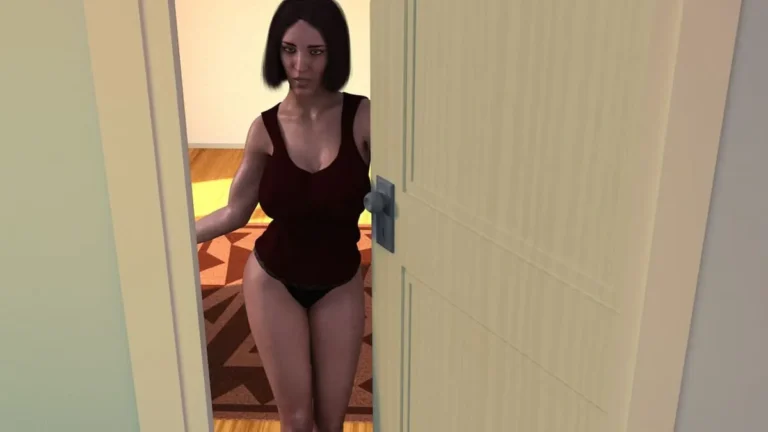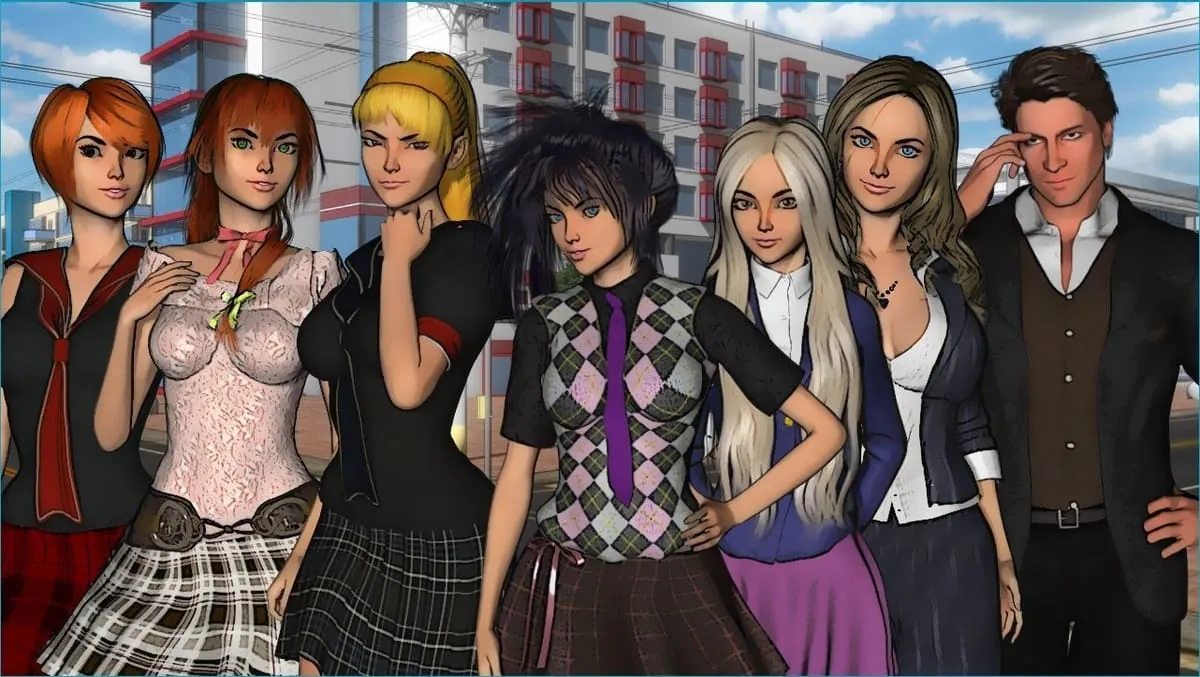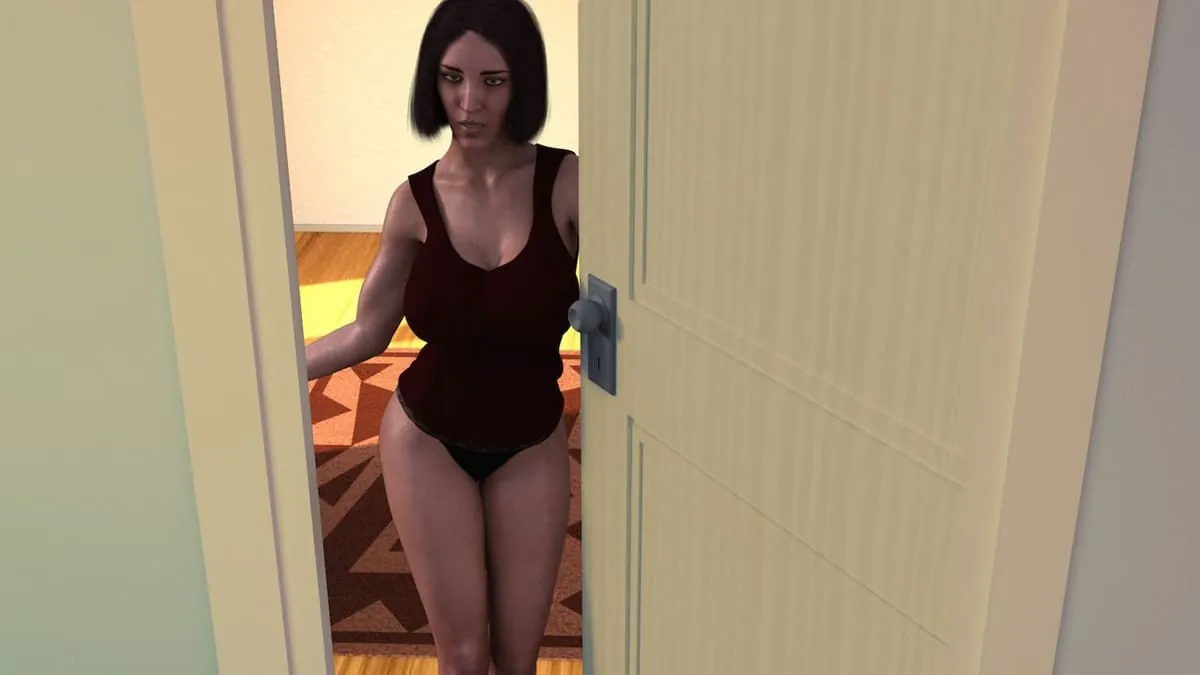
Dual Family
Play Dual Family
Dual Family Screenshots

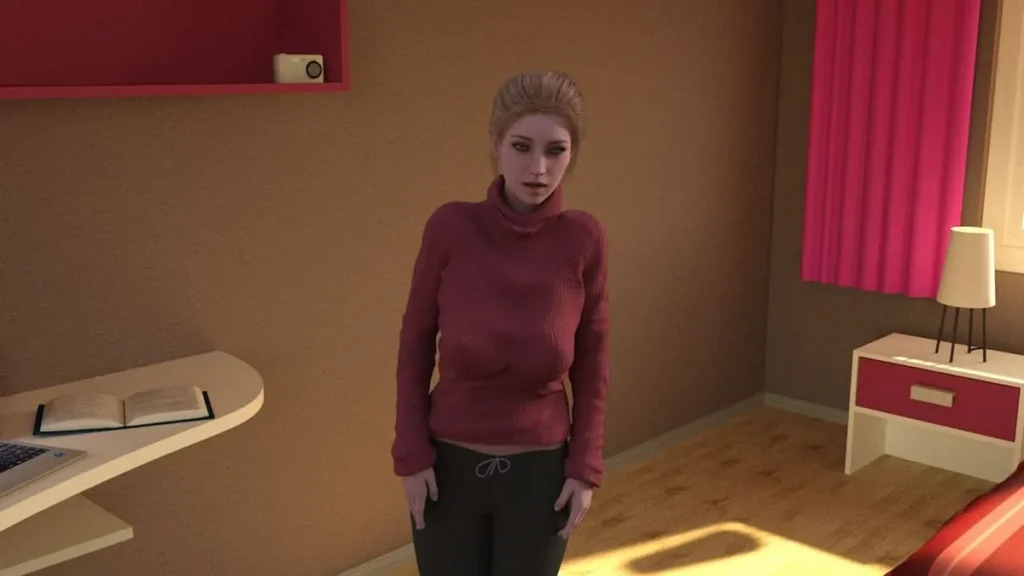
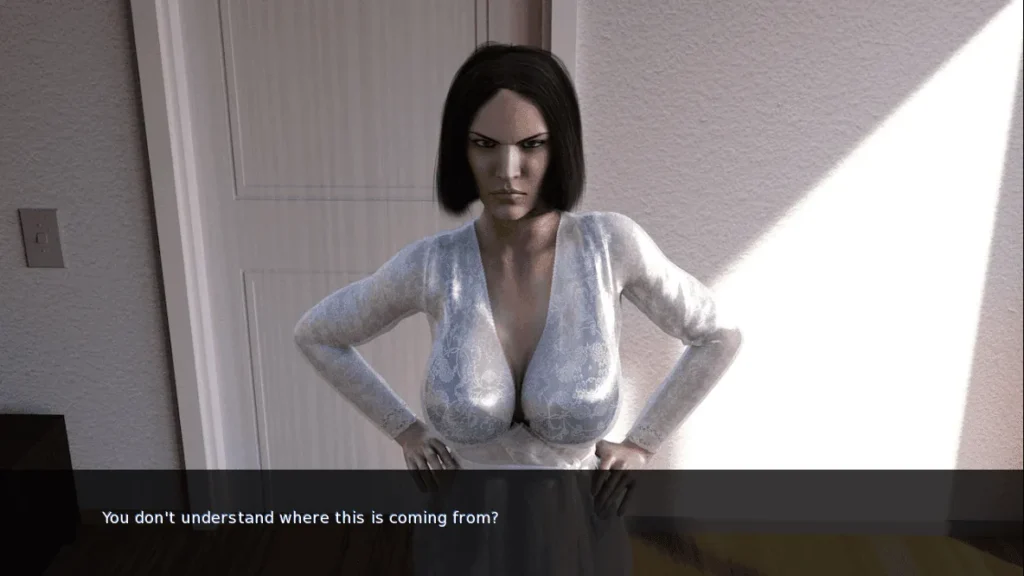
Dual Family review
Explore the branching narrative and choice-driven mechanics of this adult visual novel
Dual Family stands out as a narrative-driven adult visual novel developed by Gumdrop Games that challenges conventional storytelling within the genre. The game presents a complex family dynamic where relationships fracture under emotional and physical strain, offering players the opportunity to experience the story from multiple perspectives. With its emphasis on meaningful choices, branching storylines, and psychological depth, Dual Family delivers an immersive experience that combines explicit content with genuine narrative craft. Whether you’re drawn to choice-driven gameplay or complex character development, this visual novel offers a unique exploration of human connection during family crisis.
Understanding the Dual Family Storyline and Core Premise
Let’s be honest—most games in the adult visual novel space offer a simple fantasy. You click, you get a scene, the story is a straight line from A to B. It’s satisfying in its way, but it rarely sticks with you. I remember playing a few like that, thinking, “Is this it?” The characters felt like cutouts, and my choices never seemed to matter. 🤔
Then I found Dual Family. This wasn’t just another title on the list; it was a narrative experience that completely redefined my expectations. What grabbed me wasn’t the premise alone—though it’s compelling—but how it uses its mechanics to make you feel the weight of every single decision. This game isn’t about wish fulfillment; it’s about navigating a heartbreaking, all-too-human collapse with impossible stakes. It’s the family crisis narrative executed with a precision and emotional bravery I simply wasn’t prepared for.
At its core, the Dual Family storyline asks one devastating question: What happens when the family unit, that foundation of our lives, begins to fracture from within? This game doesn’t just show you the cracks; it makes you live inside them, from two agonizingly different points of view.
The Central Narrative: A Family in Crisis
The story of Dual Family begins not with an explosion, but with a quiet, chilling erosion. We meet a family that looks whole from the outside: Father, Mother, Son, and Daughter. But the foundation is rotten. The marriage between the husband and wife is a hollow shell, a partnership frayed by neglect, routine, and unspoken resentments. The wife, feeling invisible and undesired in her own home, begins to seek validation and passion elsewhere, a search that dangerously blurs the lines between emotional need and physical desire. 😔
Simultaneously, their daughter is on the precipice of her own sexual awakening. This isn’t portrayed as a simple coming-of-age trope, but as a vulnerable, confusing, and powerful force that makes her susceptible to attention from both inside and outside the family. Her journey is fraught with peril, as she seeks guidance and connection in a house where the adults are too wrapped up in their own crises to provide a stable example.
This creates a perfect, painful storm. The Dual Family storyline masterfully intertwines these personal catastrophes. The father’s mid-life desperation, the mother’s search for identity, the son’s hormonal confusion, and the daughter’s naive exploration—all collide. The game forces you to witness how one person’s attempt to fill a void can create a vacuum for someone else. It’s a chain reaction of emotional need, and you are both the observer and the catalyst.
My Take: What struck me most wasn’t the drama itself, but its authenticity. The dialogue rings true—the heated arguments that go nowhere, the awkward silences at dinner, the longing glances filled with a history of disappointment. This family crisis narrative works because it makes you care about these broken people before it asks you to make world-altering choices for them.
Dual Perspective Gameplay: Father vs. Son
This is where Dual Family transforms from a great story into a genuine innovation. The titular “dual” mechanic isn’t a gimmick; it’s the core of the entire experience. After the prologue, you are presented with a monumental, game-defining choice: Play as the Father or play as the Son. This decision doesn’t just change a few scenes—it fundamentally rewires the entire narrative, the available choices, and your emotional allegiance. It’s the ultimate expression of perspective-based gameplay. 🎭
Choosing the Father means grappling with failure, responsibility, and a desperate attempt to reclaim what’s slipping away. Your gameplay is defined by a struggle for control. You’re trying to be the patriarch, to fix your marriage, to protect your daughter, and to understand your son—all while battling your own insecurities and temptations. The choices here are often about restraint, sacrifice, and trying to hold the center. Will you try to rekindle your marriage with genuine effort, or seek comfort in forbidden places? Will you confront your wife about her distance, or silently resent her? Every decision feels heavy with the weight of duty.
Choosing the Son plunges you into a world of chaotic discovery, rebellion, and raw, unfiltered desire. Your perspective-based gameplay is now about exploration and breaking boundaries. You’re navigating first loves, rivalry with your father, and the confusing signals from the women around you, including your own sister. Your choices are often impulsive, driven by curiosity and hormones. Will you pursue the girl at school, or become dangerously entangled at home? Will you see your father as an obstacle or a rival? The power dynamics are completely flipped, and the same family home feels like a different, more tantalizing prison.
To show just how profound this split is, let’s break it down:
| Aspect | Father Perspective | Son Perspective |
|---|---|---|
| Core Motivation | Restoration, Control, Duty | Discovery, Freedom, Rebellion |
| Primary Conflict | Internal (guilt, inadequacy) vs. External (saving family) | External (social pressures, rules) vs. Internal (confusing desires) |
| Relationship with the Wife/Mother | A strained partner to be won back or lost forever. Choices involve romance, confrontation, or neglect. | A distant authority figure, or an object of complex, taboo curiosity. Choices involve seeking maternal comfort or something else. |
| Relationship with the Daughter/Sister | A child to protect. Choices are paternal, fraught with worry and a need to guide. | A sibling with a shifting dynamic. Choices can be protective, competitive, or dangerously intimate. |
| Key Gameplay Tension | Managing decay. Trying to stop the bleeding in multiple relationships at once. | Navigating awakening. Balancing newfound power and agency with a lack of wisdom. |
I played through the game twice—once as each character—and it felt like two completely different stories set in the same burning house. As the Father, I felt a constant, gnawing anxiety. As the Son, I felt a reckless, thrilling danger. This dual perspective gameplay is a narrative masterstroke, forcing you to understand that in a family crisis, there is no single truth, only heartbreaking, conflicting realities. 😮💨
Character Development and Relationship Dynamics
The genius of Dual Family is that its brilliant structure would mean nothing without the deeply human characters that populate it. This isn’t a game about “romancing” characters in isolation. It’s a meticulously crafted web of character relationships where every connection exists in a fragile, dynamic balance. The game tracks your standing with each character with the care of a master watchmaker. Pursuing a deeper bond with one character will inevitably strain, damage, or even sever your bond with another. There are no free passes; every gain comes with a potential loss.
This is the engine of the branching narrative paths. Your story isn’t shaped by one big choice, but by hundreds of small, cumulative decisions that define who you are to each person in this family. Are you a comforting husband or a jealous watchdog? A protective brother or a corrupting influence? A respectful son or a usurping rival? The game remembers everything.
Here are some key decision points that send ripples through the entire story, showcasing the consequence-driven narrative:
- The First Intervention: Early on, you witness a moment of clear danger or emotional need for the daughter. Do you intervene directly (asserting authority/concern), indirectly (seeking help from the other parent), or ignore it (prioritizing your own needs)? This sets the tone for your protective role for the rest of the game.
- Confronting the Distance: When the marital rift becomes undeniable, how do you address it? A vulnerable, late-night heart-to-heart opens a path to reconciliation. A furious accusation slams the door shut. Avoiding the conversation allows the rift to become a chasm. This is a major fork in the Dual Family storyline.
- Seeking Solace Outside: The temptation to find understanding or passion outside the home is a constant pressure. Giving in to these temptations can provide short-term satisfaction but will irrevocably poison trust with core family members, closing off entire branching narrative paths.
- Sibling Confidentiality: The son and daughter share secrets. Do you encourage this bond, using it to protect each other? Or do you exploit it, creating a dangerous alliance that isolates you from your parents? This choice fundamentally alters the power structure within the home.
- The Ultimate Alliance: In the later stages, crises force you to choose a primary ally. Will you side with your spouse against the children to enforce order? Or will you form a cross-generational alliance with a child, breaking the parental unit completely? This decision is often the final push toward your specific ending.
This careful management of character relationships is what leads to the game’s celebrated multiple endings. You won’t find a simple “good” or “bad” ending screen. Instead, you’ll witness a nuanced conclusion that reflects the specific family you’ve built—or destroyed. You might achieve a hard-won, imperfect reconciliation. You might dissolve the family entirely, with members scattering to find their own peace. You might create a new, unorthodox, and deeply complicated equilibrium. Some endings are bittersweet, some are tragic, and a rare few feel like hopeful new beginnings. Each one feels earned, a direct result of your choice-driven gameplay throughout.
My first ending was a quiet tragedy. As the Father, I was so focused on trying to “fix” my wife that I completely failed my daughter, who spiraled without my guidance. The family survived, but it was a ghost of what it once was. It hit me hard because I could trace my mistake back to a specific, well-intentioned choice in Chapter 3. That’s the power of this game.
Dual Family uses its adult themes not as an end goal, but as a narrative tool to explore profound psychological terrain: loneliness, the hunger for validation, the corruption of responsibility, and the terrifying fluidity of love. Its branching narrative paths and multiple endings are a direct challenge to the player. You are given immense power to shape these lives, forcing you to confront the kind of person you become when faced with impossible choices. It’s a stunning, emotionally charged experience that remains with you long after you close the game. 🏡✨
Dual Family represents a sophisticated approach to adult gaming by prioritizing narrative depth and player agency alongside explicit content. The game’s strength lies in its consequence-driven decision system, where every choice meaningfully impacts character relationships and story outcomes, creating a personalized experience for each player. With multiple perspectives, branching storylines, and numerous endings, the game encourages exploration and replay, revealing different facets of the family drama with each playthrough. The combination of psychological complexity, realistic dialogue, and dramatic scenarios creates an experience that transcends typical genre conventions. For players seeking a visual novel that respects their intelligence while delivering mature content, Dual Family offers a compelling blend of storytelling craft and interactive engagement that keeps the narrative engaging from beginning to end.